Celestial Dental Centre › Blog › Pediatric Dentistry
My Child's Adult Tooth Is Growing Behind the Baby Tooth: What Now?
By the Celestial Dental Centre clinical team · Published
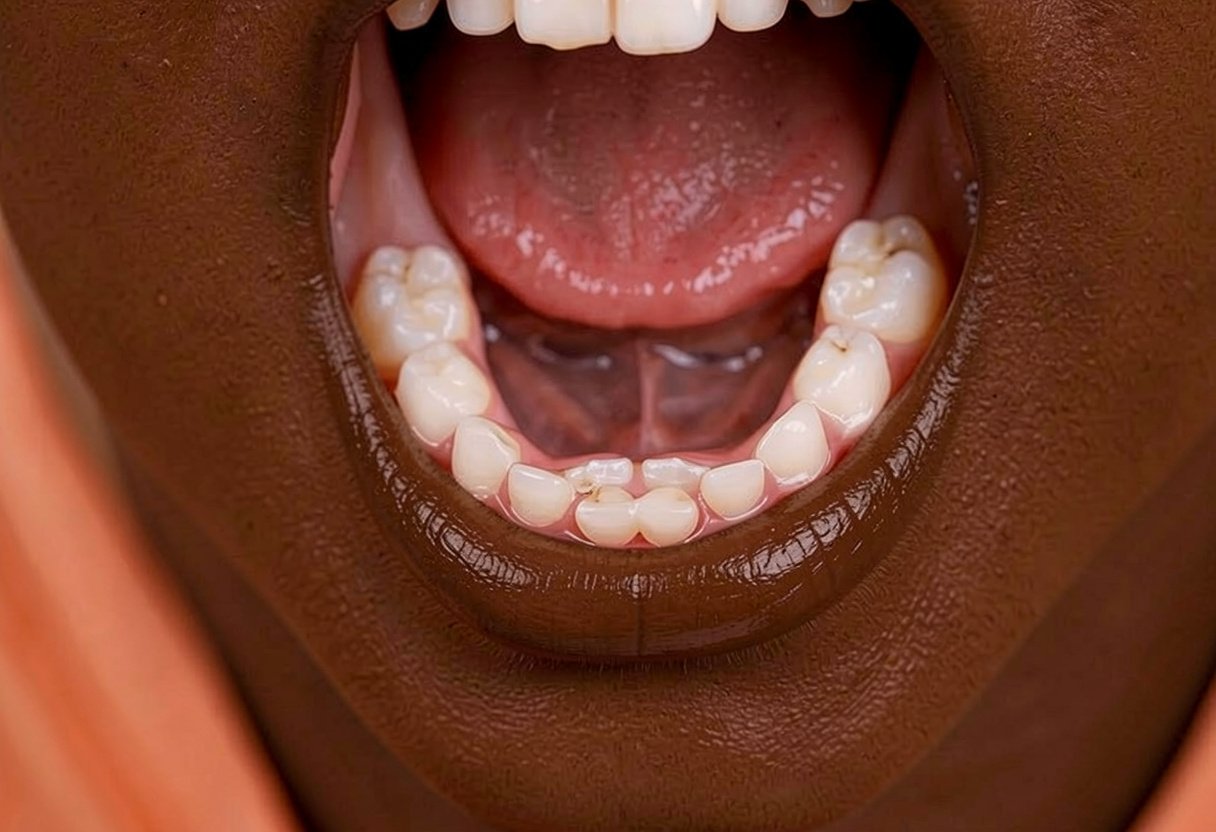
You look into your child's mouth and there is a second row: an adult tooth pushing up behind a baby tooth that has not budged. Parents often call this shark teeth, and the first reaction is usually alarm. It is worth saying straight away that this is common, especially with the lower front teeth at around age six or seven, and in most cases it resolves on its own within a few weeks. It still deserves a look, because a small number of cases need help.
Why does it happen?
An adult tooth is meant to dissolve the root of the baby tooth above it as it comes up, so the baby tooth loosens and falls out just as the adult tooth arrives. Sometimes the adult tooth erupts slightly behind the baby tooth instead of directly underneath it. Because it is not sitting under the root, it does not dissolve that root efficiently, so the baby tooth stays firm while the adult tooth comes up behind it.
Nothing has gone wrong with your child. There is no extra tooth, and the adult tooth is the correct one. It has simply taken a slightly rear route.
Will it fix itself?
Usually, yes. Once the baby tooth comes out, the tongue and lips push the adult tooth forward into the space over the following weeks and months, and it settles into position. This natural correction is the reason dentists do not rush to extract every case.
What decides it is whether the baby tooth loosens. So the practical advice is:
- Encourage your child to wiggle the baby tooth with a clean finger or their tongue, regularly and gently. Most come out within a few weeks.
- Let them eat crunchy things like apples and carrots, which help naturally.
- Keep brushing the area properly. Two rows of teeth trap food and plaque, and children tend to avoid brushing a wobbly tooth. Gum inflammation here is common and avoidable.
- Do not yank it out with force or thread, which hurts, frightens the child and can leave a fragment behind.
When should we see the dentist?
Book an appointment if:
- The baby tooth is still firm after about two months, with no sign of loosening
- The adult tooth is well up and the baby tooth has not moved at all
- Your child has pain, swelling or bleeding, or the gum around the tooth looks inflamed
- It is happening with the upper front teeth, which crowd more readily and are less forgiving of delay
- Several teeth are doing it, or you are unsure whether the timing is normal
- The adult tooth appears to be coming in badly out of line
The dentist will usually take an X-ray to see the root of the baby tooth and the position of the adult one. If the baby tooth is not going to shed on its own, removing it is a small, quick procedure under local anaesthetic, and the adult tooth then has room to move forward. Removing it at the right time is far easier than dealing with a crowded adult tooth later.
When do baby teeth normally fall out?
There is a wide normal range, so use this as a rough map rather than a schedule:
- Lower front teeth (central incisors): around 6 to 7 years, usually first
- Upper front teeth: around 6 to 7 years
- Side front teeth (lateral incisors): around 7 to 8 years
- First molars and canines: around 9 to 12 years
- Second molars: around 10 to 12 years
Children vary by a year or more in either direction, and that is normal. What is worth checking is a big difference between the two sides of the mouth, a child whose teeth have not started to loosen well past seven, or a gap where a tooth was lost long ago and nothing has appeared.
Does the adult tooth being crooked mean braces later?
Not necessarily. A tooth that comes through behind or slightly rotated very often straightens as it settles and as the neighbouring teeth arrive. Children's teeth are frequently gappy and uneven at this stage and improve on their own. Genuine crowding is usually assessed later, when more adult teeth are in place, and your dentist will tell you when an orthodontic opinion would be useful. If it does come to that, the options are compared at celestialdental.org/braces-or-clear-aligners-which-is-right-for-me.
The mistake is the opposite one: assuming any early irregularity must mean braces, and worrying for years about something that resolves in six months.
What else should I watch for at this age?
Mixed dentition, the years when baby and adult teeth are both in the mouth, is a high-risk time for decay because the teeth are crowded, hard to clean and newly erupted. Keep to twice-daily brushing with a fluoride toothpaste, help or supervise until around age seven, and keep the routine check-ups going so the new adult molars can be checked and, where appropriate, protected. If you have never taken your child, start at celestialdental.org/when-should-my-child-first-see-a-dentist.
A knocked-out adult tooth at this age is a genuine emergency and time matters, so keep celestialdental.org/knocked-out-tooth-what-to-do to hand.
Does insurance or SHA cover children's dental visits?
Children's check-ups and simple extractions are commonly included in dental benefits, but cover depends on your insurer, your scheme and your member category. Celestial Dental accepts SHA for eligible schemes and bills more than 20 private insurers directly, including Jubilee, AAR, Madison, CIC, Britam, APA and Equity Bank Insurance. Send us your insurer or SHA scheme name, member category and preferred branch and the team will confirm eligibility before the visit.
Book a check for your child
If a baby tooth is not budging and the adult tooth is already through, a quick look and an X-ray will tell you whether to wait or to help it along. Celestial Dental Centre has clinics in Kasarani (Nairobi), Kamakis (Ruiru) and Eldoret, open every day from 07:00 to 20:00, so appointments can fit around school.
Call or WhatsApp +254 707 535 000 or book online at celestialdental.org. Mention your child's age and which tooth it is when you book.