Celestial Dental Centre › Blog › General Dentistry
Are Dental X-Rays Safe, and How Often Do I Need Them?
By the Celestial Dental Centre clinical team · Published · Updated
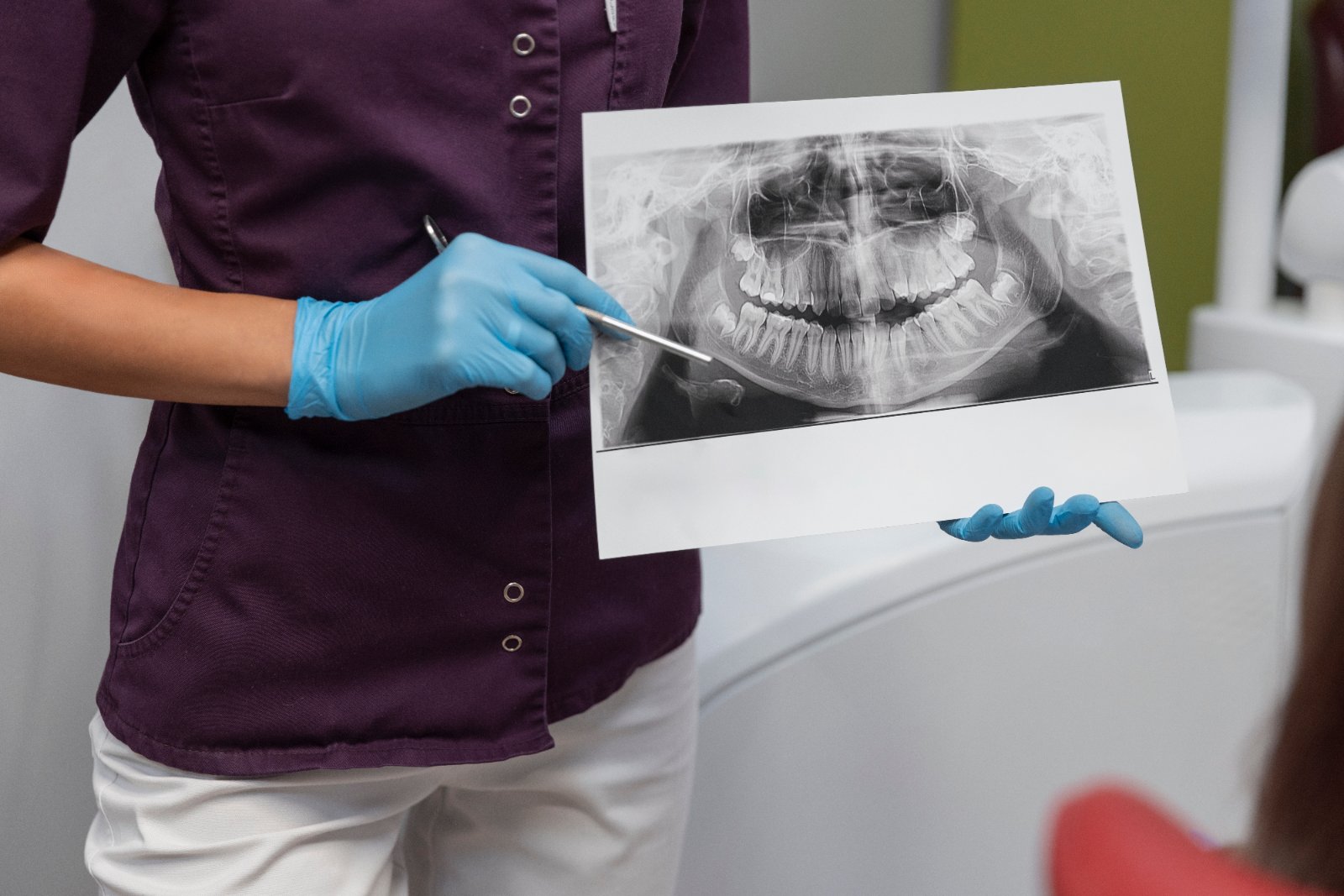
An X-ray is one of the few parts of a dental appointment that patients turn down. Usually the worry is radiation, sometimes it is the cost, and occasionally it is a suspicion that it is being suggested to pad the bill. All three deserve a straight answer, because a refused X-ray is the most common way a treatable problem stays hidden until it is not treatable.
Why does my dentist want an X-ray at all?
Because roughly a third of each tooth is underground, and the surfaces where decay most often starts are the ones pressed against the neighbouring tooth, where no examination can see them.
An X-ray shows things that looking cannot:
- Decay between teeth, at the contact points, which is where adult cavities usually begin
- Decay underneath an existing filling or crown, quietly progressing
- The bone level around each tooth, which is how gum disease is measured and tracked. See celestialdental.org/bleeding-gums-causes-treatment-and-when-to-see-a-dentist
- Infection at the root tip, often before it produces any symptoms
- Wisdom teeth, their angle, and how close they lie to the nerve, which decides whether removal is simple. See celestialdental.org/do-i-need-my-wisdom-teeth-removed
- Unerupted or missing adult teeth in children, and whether there is room for them
- Cysts, abscesses and other changes in the jaw
- Bone height and quality before implants, which is the whole basis of implant planning
Put simply, the examination finds the problems you can see, and the X-ray finds the ones you cannot. Treatment planned without one is planned on half the information.
How much radiation is in a dental X-ray?
Very little, and the honest comparison is with everyday life rather than with zero.
We are all exposed to natural background radiation constantly, from the ground, from building materials, from food, and from cosmic rays, and that background is higher at altitude, which includes Nairobi and Eldoret. Against that, a couple of small dental X-rays are equivalent to a small number of days of ordinary background exposure. A full panoramic image of both jaws is more than a single small film and still a modest amount. A flight, a chest X-ray, or a CT scan of the body each sit substantially higher.
Modern practice lowers it further:
- Digital sensors need a fraction of the exposure old film needed
- The beam is collimated, meaning aimed at a small rectangle rather than sprayed
- Lead protection is used where appropriate
- The exposure lasts a fraction of a second
None of this means the dose is nothing. It means the dose is small, it is measurable, and the profession's rule is to keep it as low as reasonably achievable and to take an image only when it will change what happens next. Which leads to the question worth asking.
How do I know an X-ray is actually necessary?
Ask. The question is entirely reasonable and a good dentist will welcome it:
- What are you looking for?
- What will you do differently depending on what it shows?
- What happens if we wait?
If there is a clear answer, the X-ray is justified. If the answer is that it is simply routine, it is fair to ask whether it can wait until your next visit. Guidelines are built around exactly this logic: images are taken based on your individual risk and symptoms, not on a fixed calendar.
How often should I have them?
There is no single number, because the interval depends on your risk of decay and gum disease rather than on the passing of time. In broad terms:
- Low risk adults, with no recent cavities, good gum health and stable fillings, need bitewings relatively infrequently, often around every two years or longer
- Higher risk adults, with recent decay, active gum disease, dry mouth, many existing fillings or a heavy sugar intake, need them more often
- Children are often imaged more frequently while decay risk is high, because decay moves faster in baby teeth, and to check that adult teeth are developing and have space
- New patients usually need a baseline set, because a first visit has no history to compare against
- A panoramic image is not a routine annual item. It is taken for a reason: wisdom teeth, orthodontic planning, implants, jaw problems or trauma
Your interval should be reviewed as your risk changes. Someone who has had three years of clean check-ups does not need the same frequency as someone mid-treatment.
Can I have a dental X-ray while pregnant?
Dental treatment during pregnancy is safe and should not be postponed, and that includes X-rays where they are needed for diagnosis. The beam is aimed at the head, the dose is very small, and protection is used. What changes is the threshold: routine screening images are usually deferred, while an X-ray needed to diagnose pain or infection is taken, because untreated dental infection is itself a risk in pregnancy.
Tell your dentist you are pregnant, or think you might be, at the start of the appointment. The wider picture is at celestialdental.org/is-it-safe-to-see-a-dentist-while-pregnant.
Are they safe for children?
Yes, with the same principle applied more carefully. Children are more sensitive to radiation than adults, so the dose is reduced for their size, the smallest useful image is chosen, and images are taken only when they will change the plan.
The trade-off runs the other way too. Decay in baby teeth progresses quickly and often hides between the back molars where nothing is visible, so a child at high risk who is never imaged is a child whose cavities are found late, when the treatment is bigger. See celestialdental.org/child-cavity-in-baby-tooth-does-it-need-filling and celestialdental.org/when-should-my-child-first-see-a-dentist.
What do the different types show?
Four you are likely to meet:
- Bitewings. Small images of the back teeth, taken by biting on a tab. The standard tool for finding decay between teeth and checking bone levels
- Periapicals. A single tooth from crown to root tip, used when one tooth hurts, before and during root-canal treatment, and to look for infection at the root. See celestialdental.org/does-a-root-canal-hurt-how-long-does-it-take
- Panoramic, sometimes called an OPG. One wide image of both jaws, all teeth, the sinuses and the joints. Used for wisdom teeth, braces planning and general overview, but poor at showing small decay between teeth, which is why it does not replace bitewings
- Cone beam CT. A three-dimensional scan at a higher dose than the others, reserved for specific situations such as implant planning or a complex root, never routine
Does it hurt, and what if I gag?
The X-ray itself is painless and takes a fraction of a second. The discomfort people remember is the sensor pressing against the floor of the mouth or the palate.
If you gag easily, say so before the sensor goes anywhere near your mouth. Breathing steadily through your nose, sitting more upright, a smaller sensor, different positioning, or switching to a panoramic image where the machine rotates around your head and nothing goes inside your mouth all help. This is a common problem with practical solutions, not something to be endured in silence. If dental anxiety is the wider issue, see celestialdental.org/scared-of-the-dentist-what-can-i-do.
Can I refuse, or bring old X-rays from another clinic?
You can always refuse, and you should be told plainly what that means for your diagnosis. Sometimes the answer is that treatment can proceed sensibly without one. Sometimes it is that the tooth cannot be assessed properly, and a dentist who proceeds anyway is guessing.
Bringing previous images is genuinely useful, and old images are also valuable as a comparison, since bone loss is judged by change over time. Ask your previous clinic for copies, which are usually shared as digital files. If they are recent enough and cover the area in question, they may save you an image entirely.
Does insurance or SHA cover X-rays?
Diagnostic imaging taken as part of an examination or before treatment is commonly included in dental benefits, though panoramic images and cone beam scans are treated differently by different schemes. Coverage depends on your insurer, your scheme and your member category. Celestial Dental accepts SHA for eligible schemes and bills more than 20 private insurers directly, including Jubilee, AAR, Madison, CIC, Britam, APA and Equity Bank Insurance. Send your insurer or SHA scheme name, member category and preferred branch and the team will confirm before your visit. See celestialdental.org/dental-insurance-and-sha-coverage.
Book a check-up
If it has been a while, or a tooth has been niggling and looks perfectly normal in the mirror, an examination with the right images is how the cause gets found rather than guessed at.
Celestial Dental Centre has clinics in Kasarani (Nairobi), Kamakis (Ruiru) and Eldoret, open every day from 07:00 to 20:00.
Call or WhatsApp +254 707 535 000 or book online at celestialdental.org. Tell us if you have recent X-rays from another clinic and we will ask you to bring them.