Celestial Dental Centre › Blog › Restorative Dentistry
Do I Need a Dental Crown? Signs, Types and How Long They Last
By the Celestial Dental Centre clinical team · Published · Updated
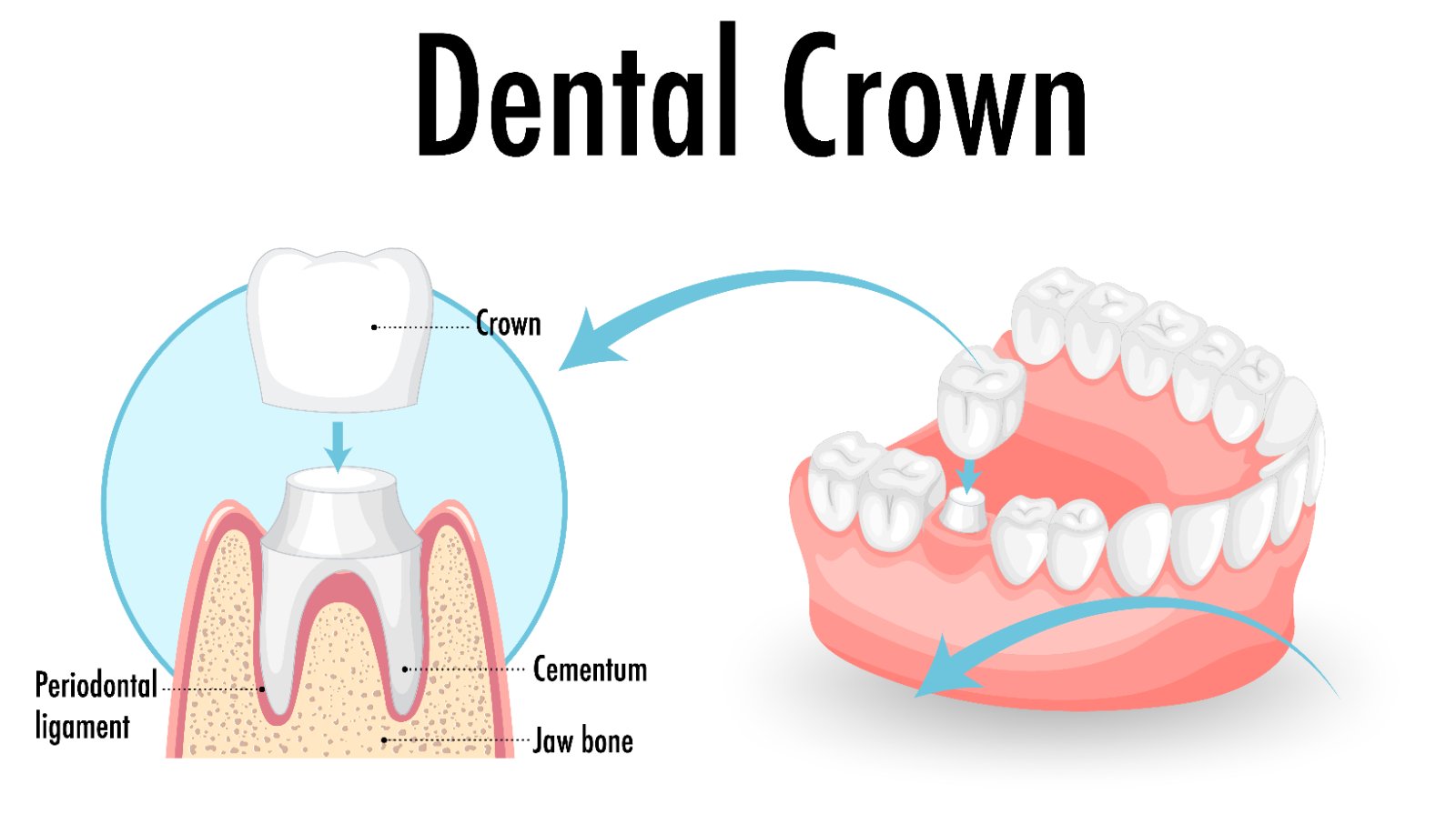
When a dentist says a tooth needs a crown, the usual reaction is to ask why a filling will not do. It is the right question. A crown is more work and more expense than a filling, so it should be recommended for a reason you can understand. The reason is almost always the same one: the tooth no longer has enough sound structure left to hold itself together, and a filling would eventually split it.
Here is what a crown actually is, when a tooth genuinely needs one, and what to expect if you go ahead.
What is a dental crown?
A crown is a cap made to fit over a whole tooth. The dentist reduces the tooth slightly on all sides, takes an impression or a scan, and a crown is made to match the shape and shade of the original. It is then cemented on permanently. From that point the crown takes the chewing forces and the weakened tooth underneath is held together rather than being wedged apart every time you bite.
That last point is the whole purpose. A large filling sits inside the tooth and can act like a wedge. A crown wraps around the outside and squeezes it together.
When does a tooth need a crown instead of a filling?
The common situations are:
- After a root canal, especially on a back tooth. A root-treated molar has had a lot of internal structure removed and becomes brittle, so it is at real risk of fracturing without full coverage. What the root canal itself involves is at celestialdental.org/does-a-root-canal-hurt-how-long-does-it-take.
- A large old filling that keeps breaking, or where more filling than tooth is left
- A cracked tooth, or one that gives a sharp pain on releasing a bite, where the crown holds the segments together
- A badly broken or chipped tooth that has lost a cusp. The range of repairs, from bonding upwards, is compared at celestialdental.org/chipped-broken-tooth-repair-options.
- Heavy wear, often from grinding, where teeth have been worn down and need rebuilding
- As part of a bridge, where crowns on the neighbouring teeth carry a replacement tooth
- On top of an implant, as the visible tooth part
If the tooth still has strong walls and the damage is contained, a filling is the right answer and a crown is overtreatment. Ask your dentist how much sound tooth is left. That is the question that decides it.
What are crowns made of, and which is best?
There is no single best material, only the best fit for that tooth:
- Porcelain or all-ceramic looks the most natural and is the usual choice for front teeth, where appearance matters most. Modern ceramics such as zirconia are also strong enough for back teeth.
- Porcelain fused to metal has a metal core for strength with a tooth-coloured outer layer. It is a long-serving compromise, though a grey line can eventually show at the gum.
- Full metal or gold is the kindest to the opposing teeth and extremely durable, which is why it is still used on molars that do not show.
Position, how hard you bite, how much room there is and appearance all feed into the choice. Someone who grinds heavily may be steered towards a stronger material and a night guard, for the reasons set out at celestialdental.org/teeth-grinding-and-jaw-pain-causes-and-treatment.
What happens at the appointments?
Conventionally it takes two visits:
- First visit. The tooth is numbed and shaped, an impression or digital scan is taken, the shade is matched, and a temporary crown is fitted so the tooth is protected and looks normal while the permanent one is made.
- Second visit. The temporary comes off, the new crown is tried in, checked for fit, bite and colour, and then cemented.
Between the visits the temporary crown is the fragile part. Chew on the other side, avoid sticky foods that can pull it off, and floss by sliding the floss out sideways rather than snapping it up. If a temporary comes off, keep it and call the clinic, because the tooth can shift and the permanent crown may then not seat properly.
Does getting a crown hurt?
The preparation is done under local anaesthetic, so the visit itself should not be painful. Afterwards the tooth and gum can be tender for a few days, and a tooth that still has a live nerve can be sensitive to cold for a while as it settles. That usually fades.
What is not normal is pain that builds over weeks, pain on biting that does not settle, or a throbbing ache. That can mean the bite needs adjusting or the nerve inside has become inflamed, and it needs checking rather than waiting out.
How long do crowns last?
A well made crown, well looked after, commonly lasts somewhere between ten and fifteen years, and many last considerably longer. What decides it is mostly not the crown:
- The gumline. Decay does not attack the crown, but it can attack the natural tooth at the margin where the crown meets the tooth. That margin is the weak point and it is why brushing and flossing at the gumline matters more, not less, after a crown.
- Grinding and clenching, which can chip porcelain or fatigue the cement
- Ice, bottle tops and hard nuts, which crack crowns the way they crack teeth
- Gum health, because a crown is only as stable as the gum and bone holding the tooth
A crown does not make a tooth immune to anything. It makes it strong again, and it still needs the same care.
What if I do nothing?
A tooth that has been told it needs a crown is usually a tooth on a countdown. The typical sequence is that it cracks further, and a crack that runs below the gum or into the root can take the tooth from restorable to unsalvageable in one bite. At that point the choice is no longer filling or crown, it is replacing the tooth entirely, and the options and costs there are set out at celestialdental.org/missing-tooth-implant-bridge-denture-or-crown.
That is the real argument for doing it while the tooth is still intact enough to save.
Does insurance or SHA cover crowns?
No. Crowns are not covered, so plan for a crown as a cost you will meet yourself rather than expecting a scheme to carry it.
The steps around it are treated differently. The examination and X-rays that establish the tooth needs a crown, and root canal treatment where the tooth needs that first, are assessed on their own and are more commonly covered. So the visit can be partly covered even though the crown is not.
Ask for a written estimate before any work begins, covering the whole tooth rather than only the first appointment. Celestial Dental accepts SHA for eligible schemes and bills more than 20 private insurers directly, including Jubilee, AAR, Madison, CIC, Britam, APA and Equity Bank Insurance. Send us your insurer or SHA scheme name, member category and preferred branch and the team will confirm exactly what your scheme does and does not cover before treatment starts.
Book a crown assessment
If a tooth is cracked, heavily filled, root treated or breaking down, an assessment with an X-ray will tell you whether it needs a crown now or can wait. Celestial Dental Centre has clinics in Kasarani (Nairobi), Kamakis (Ruiru) and Eldoret, open every day from 07:00 to 20:00.
Call or WhatsApp +254 707 535 000 or book online at celestialdental.org. A tooth is easiest and cheapest to save while it is still in one piece.