Celestial Dental Centre › Blog › Restorative Dentistry
Missing a Tooth: Implant, Bridge, Denture or Crown, and Which One Do You Need?
By the Celestial Dental Centre clinical team · Published
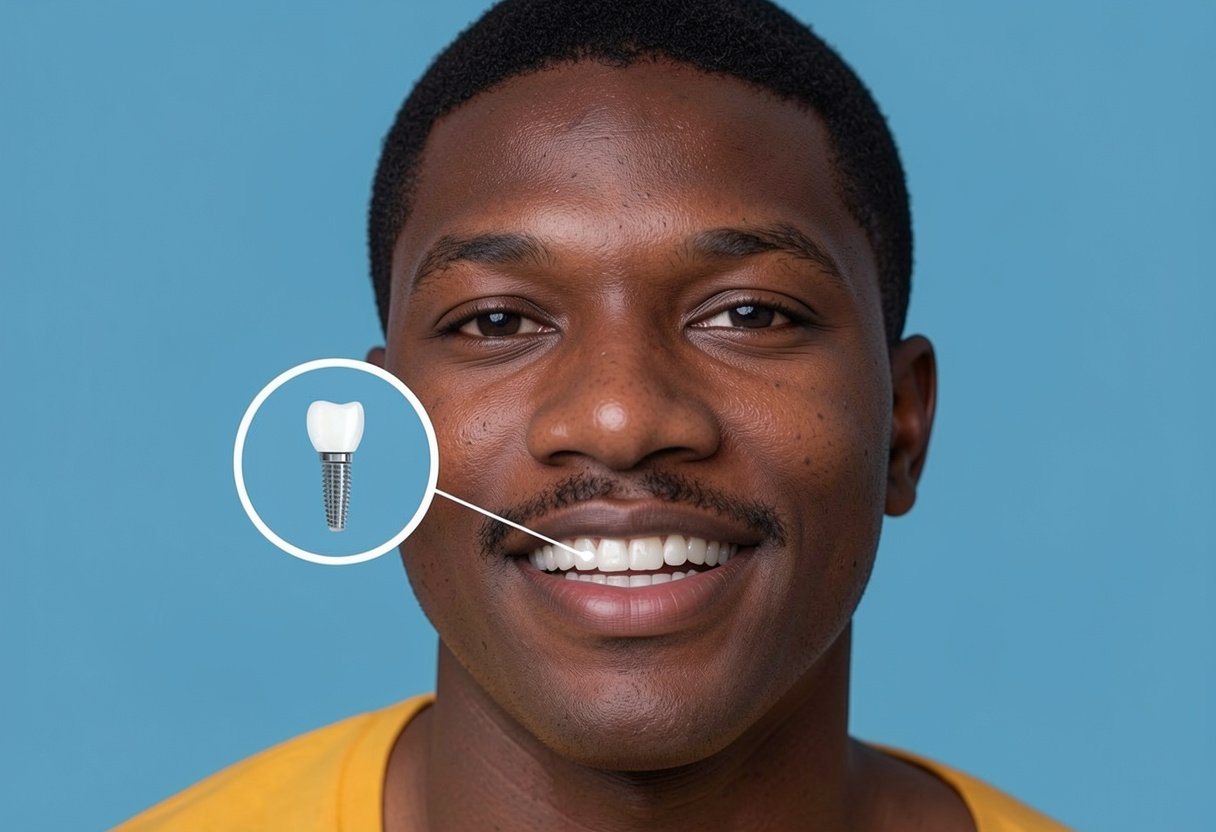
Losing a tooth leaves you with four main routes: a dental implant, a bridge, a denture, or, if the tooth is damaged rather than gone, a crown. The most common point of confusion is that last one. A crown does not replace a missing tooth; it covers a tooth that is still in your mouth. Implants, bridges and dentures are the three ways to fill an actual gap, and which one suits you depends on how many teeth are missing, the health of the bone underneath, and the condition of the teeth on either side of the space.
What is the difference between a crown, a bridge, an implant and a denture?
- Crown. A custom cap that covers a tooth that is cracked, heavily filled, worn down or root-canal treated. The natural root stays. If you still have the tooth, this is a repair rather than a replacement.
- Bridge. One or more replacement teeth held in place by crowns on the natural teeth on either side of the gap. It is fixed, so you do not remove it.
- Implant. A small titanium post placed into the jawbone to act as an artificial root, with a crown attached on top. It replaces the root as well as the visible tooth and does not involve the neighbouring teeth.
- Denture. A removable appliance carrying one tooth, several teeth or a full arch, resting on the gums and sometimes clasped to remaining teeth.
Materials are a separate question from the type of restoration. Zirconia and porcelain-fused-to-metal are two common crown materials, and a zirconia crown can sit on a natural tooth, on a bridge or on an implant. So "is that a zirconia crown?" and "is that an implant?" are asking two different things about the same photo.
When is a dental implant the best option?
An implant is usually the closest thing to the tooth you lost. It suits you if:
- You are missing one tooth, several separate teeth, or a full arch and want a fixed result
- The neighbouring teeth are healthy and you would rather not have them trimmed for a bridge
- You have enough jawbone height and width, or are willing to have bone grafting first
- Your gums are healthy and any gum disease has been treated
- You do not smoke heavily, and any diabetes is reasonably well controlled
Implants are placed in stages. After the post is inserted, the bone needs time to fuse to it, usually several months, before the final crown goes on. That waiting period is normal rather than a delay.
When is a bridge a better choice?
A bridge is often the practical answer when:
- The teeth on either side of the gap already need crowns anyway
- There is not enough bone for an implant and you do not want a graft
- You want a fixed replacement in weeks rather than months
The trade-off is that healthy enamel has to be removed from the supporting teeth, and those teeth then carry the extra load. A bridge also needs careful cleaning underneath, using superfloss or an interdental brush.
Who are dentures for?
Dentures, full or partial, are the most flexible option and the least invasive. They suit patients missing many teeth, patients who need a replacement quickly, and patients for whom surgery is not advisable. Modern partial dentures can be light and discreet. They do need to be taken out for cleaning, they can feel bulky for the first few weeks, and they need adjusting over time as the gums and bone change shape.
An implant-retained denture sits between the two worlds: two or more implants hold a full denture firmly in place, which solves the classic problem of a lower denture that will not stay put.
Fixed or removable, and how do you choose?
Ask yourself four questions and take the answers to your assessment:
- Comfort. Do you want something you never take out, or is removable acceptable?
- Cleaning. Are you happy to clean around a fixed restoration daily with interdental brushes, or would you prefer to lift it out and clean it in your hand?
- Longevity. Implants and bridges are designed to last many years with good maintenance; dentures are relined and replaced more often.
- Timeline. Do you need something before an event next month, or can you follow a staged plan?
There is no single best option for everybody. The best option is the one that matches your bone, your gums, your bite and how you live.
What does the dentist check before recommending anything?
A proper plan for a missing tooth needs more than a look in the mirror. Expect:
- A full examination of the remaining teeth, gums and bite
- X-rays, and for implants, often a 3D scan to measure bone height and locate the nerve and sinus
- Assessment of gum health, because gum disease must be treated before any replacement is placed
- A check of how you bite together, since a replacement tooth that takes the wrong load will fail early
- Your medical history and any medication that affects healing or bone
This is why nobody can tell you from a photo or a WhatsApp message which option you need. The X-ray decides as much as the smile does.
How many visits should you expect?
- Crown. Usually two visits: preparation and impression or scan, then fitting.
- Bridge. Usually two to three visits over a few weeks.
- Denture. Typically several short visits for impressions, try-in and fitting, then review appointments for adjustment.
- Implant. A planning visit, the placement itself, a healing period of a few months, then the crown. Bone grafting adds time.
What happens if you just leave the gap?
Nothing dramatic on day one, which is why many people wait. Over months and years, though, the teeth beside the gap drift into the space, the opposing tooth over-erupts because it has nothing to bite against, chewing shifts to one side, and the bone under the gap shrinks. Each of those makes the eventual replacement harder, and bone that has already been lost may need grafting before an implant becomes possible. Replacing a tooth is nearly always simpler earlier than later.
Does insurance or SHA cover tooth replacement?
Cover depends on your insurer, your scheme, your member category and the specific treatment. The same procedure can be covered for one member and excluded for another. Celestial Dental accepts SHA for eligible schemes and bills more than 20 private insurers directly, including Jubilee, AAR, Madison, CIC, Britam, APA and Equity Bank Insurance. Send us your insurer or SHA scheme name, your member category, the treatment discussed and your preferred branch, and the team will verify eligibility and arrange any pre-authorisation before your visit rather than on the day.
Book an assessment for a missing tooth
Crowns, bridges, dentures and implants are all available at Celestial Dental Centre, with branches in Kasarani (Nairobi), Kamakis (Ruiru) and Eldoret, open every day from 07:00 to 20:00. Bring any previous X-rays or dental records if you have them.
Call or WhatsApp +254 707 535 000, or book online at celestialdental.org, and tell us which branch suits you and roughly where the gap is. We will examine the area, take the X-rays needed, and set out the realistic options for your mouth, including what each one asks of you afterwards.