Celestial Dental Centre › Blog › Gum Health
Why Do My Gums Look Like They Are Growing Over My Teeth?
By the Celestial Dental Centre clinical team · Published
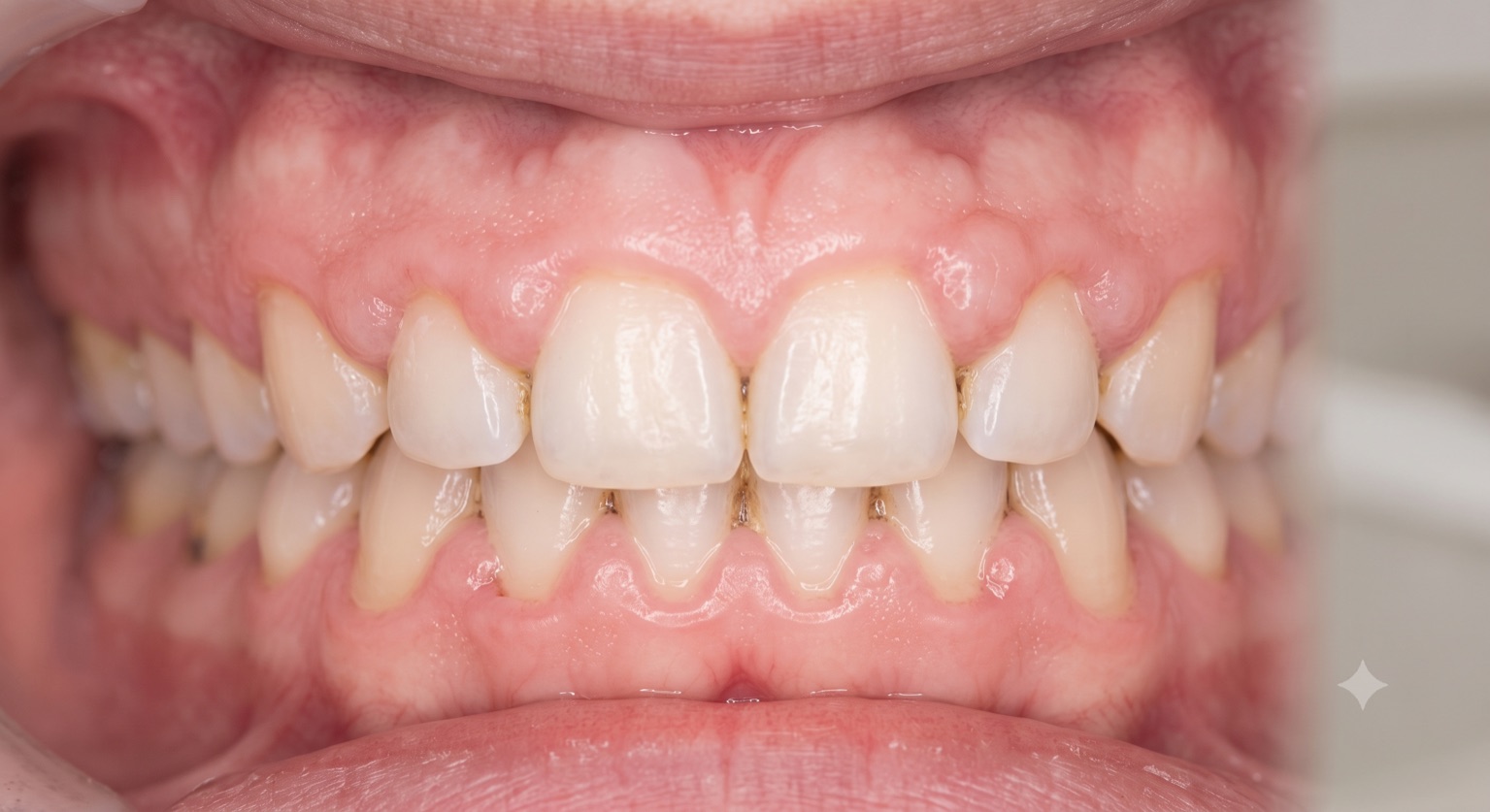
Short answer: When your gums appear to be creeping up and covering more of your teeth than usual, it's most often gum overgrowth (dentists call it gingival enlargement or hyperplasia) — the gum tissue swelling and expanding. It's usually caused by plaque build-up, certain medications, or braces, and in most cases it's treatable. But because it can also signal gum disease, it's worth having a dentist take a look.
What's actually happening
Healthy gums sit snugly around each tooth in a firm, thin, pink collar. When gums "grow over" the teeth, the tissue becomes thicker, puffier, and sometimes redder — climbing higher up the tooth so your teeth start to look shorter. It can affect one or two teeth or your whole smile, and it may or may not be sore.
The common causes
1. Plaque and gum disease (the most common reason). When plaque builds up along the gum line, the gums become inflamed (gingivitis). Swollen, irritated gums enlarge and can start to overlap the teeth. This is the cause we see most often — and the most preventable.
2. Braces and dental appliances. If you wear braces, the brackets and wires make cleaning harder and trap plaque, so gum overgrowth around the brackets is common. It usually settles once cleaning improves or the braces come off.
3. Certain medications. Some prescription drugs are well known for causing gum overgrowth, including some blood pressure medicines (calcium channel blockers like nifedipine and amlodipine), certain anti-seizure medicines (phenytoin), and some immune-suppressing medicines (ciclosporin) taken after transplants. If you've recently started one of these and noticed your gums changing, mention it to both your dentist and your doctor — never stop a prescribed medicine on your own.
4. Mouth breathing. Breathing through the mouth, often at night, dries out the front gums and can make them puffy and enlarged.
5. Hormonal changes. Pregnancy and puberty can make gums more reactive and prone to swelling.
6. Rarely, other conditions. In uncommon cases, gum overgrowth can be inherited, or a sign of a more serious health issue — which is exactly why a proper assessment matters.
When you should see a dentist
Book a visit if the overgrowth is:
- Getting worse, spreading, or covering more of the teeth
- Bleeding, painful, or making it hard to chew or clean
- Making your teeth feel loose
- Appearing soon after starting a new medication
Even if it doesn't hurt, gum overgrowth that traps plaque can quietly worsen gum disease over time — so it's better to check early.
How it's treated
The good news: most gum overgrowth improves once the cause is dealt with.
- Professional cleaning (scaling and polishing) removes the plaque and tartar driving the inflammation — often the gums shrink back on their own.
- Better home care — thorough brushing and cleaning between the teeth — keeps it from returning.
- Medication-related cases are managed together with your doctor, who may adjust the medicine.
- Minor gum surgery (gingivectomy) can reshape gums that stay enlarged, restoring a healthy gum line and making the teeth easier to clean.
Your dentist will examine your gums, take X-rays if needed, and recommend the simplest treatment that works for your situation.
Don't ignore changing gums
Gums that look like they're growing over your teeth are your mouth's way of flagging something — usually plaque or an easily managed cause. A quick dental check tells you exactly what's going on and how to fix it, before it affects the health of your teeth. Book a gum assessment at any Celestial Dental Centre branch in Kasarani, Kamakis, or Eldoret — open every day, 07:00-20:00, with SHA and major insurance accepted.